
Remote Monitoring & IoT
Stay connected to data wherever it is

Closing the information gap
Many organisations rely on equipment, infrastructure or products that operate away from the people responsible for them.
When performance changes, conditions shift, or a fault starts to develop, that information often arrives too late, or not at all.
Remote monitoring changes that. By connecting devices to the right communications, data and dashboard systems, it becomes possible to see what is happening in the field, understand how systems are behaving over time, and respond earlier.
Instead of relying on periodic inspections, manual reporting or customer complaints, you gain a more consistent and reliable view of what is happening where your systems actually operate.

The reality of remote monitoring systems
Remote monitoring is not just about connecting a device and sending data somewhere.
The real challenge is deciding what needs to be measured, how often it should be transmitted, how the system will be powered, what communications method makes sense, and how that data becomes useful once it arrives.
A system that works well in one environment may be completely wrong for another. A battery-powered device in a remote field has very different constraints from equipment inside a building using an existing network. In some cases, the challenge is long range. In others, it is low power, poor infrastructure, or the need to keep the system simple and reliable over time.
Innovisory approaches remote monitoring as a full system design problem. That means choosing the right method for the job, integrating it properly into the product, and making sure the data can be acted on in the real world.
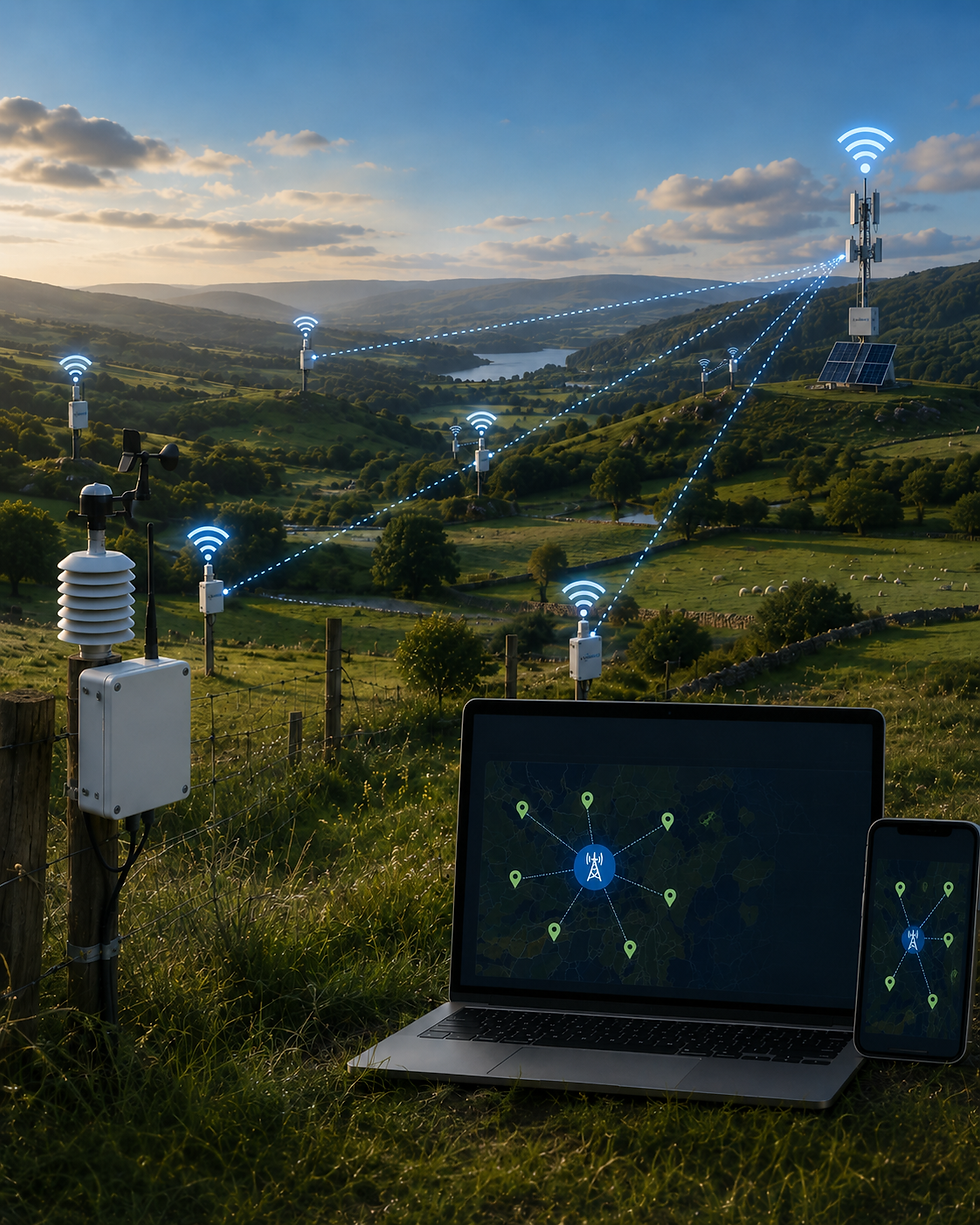
Long-range, low-power monitoring (LoRa)
For widely distributed equipment with minimal power availability.
LoRa is used where devices are spread over large areas and need to run on battery for long periods. Devices send small amounts of data over long distances to a local gateway, which passes it to the cloud.
How this helps you:
-
Monitor assets across large areas without local connectivity
-
Extend battery life and reduce site visits
-
Capture data from hard-to-reach locations
-
Avoid per-device cellular costs
What matters is not simply using LoRa, but using it where it makes operational sense. Innovisory designs LoRa systems as part of the wider product, so communications, power, data handling and long-term deployment all work together.
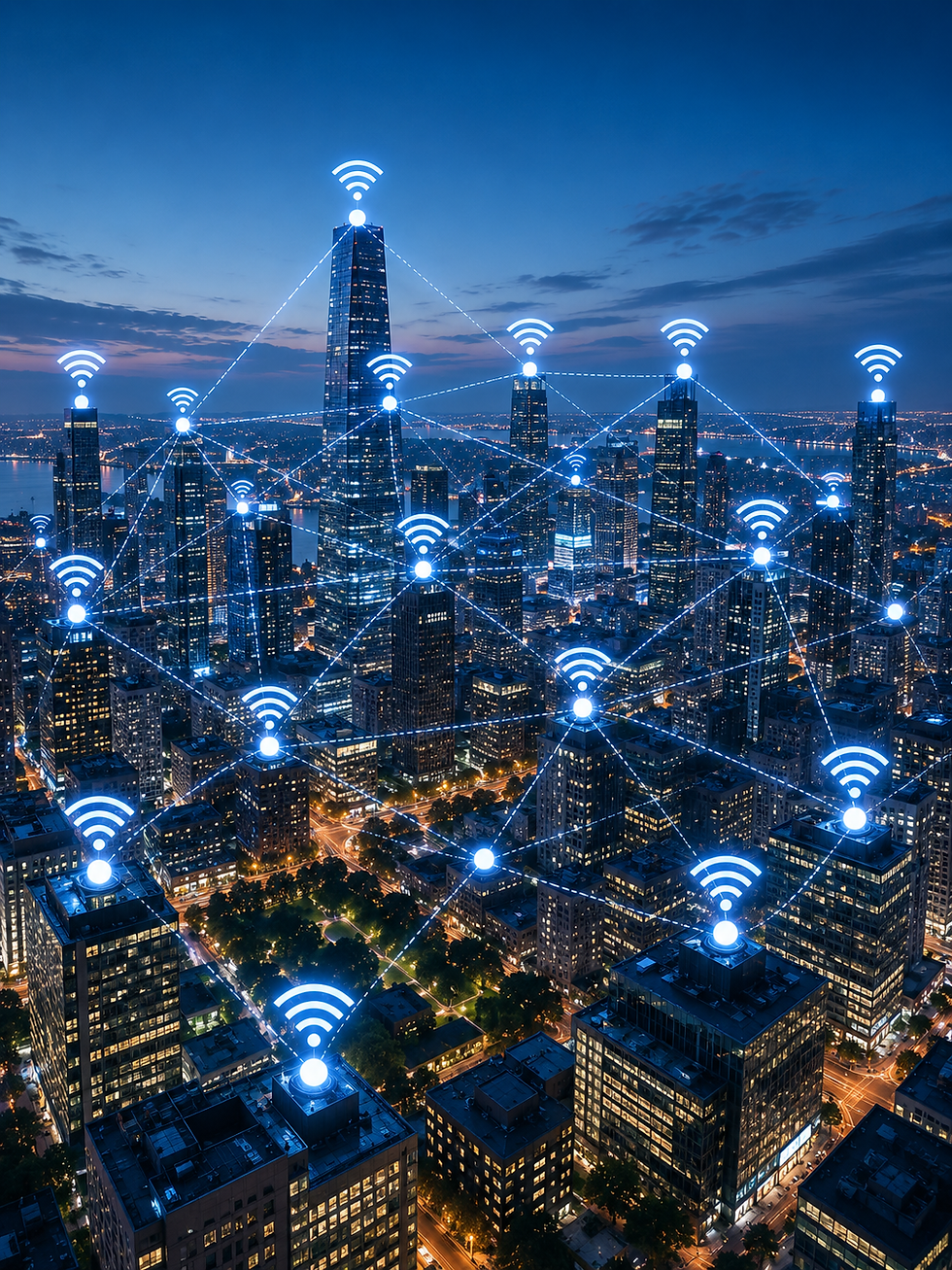
Wi-Fi and network-connected products
For connected products operating within existing networks
Wi-Fi is often the right choice when a product operates in a home, building or facility with reliable local network access. It suits applications that need more frequent communication, richer data transfer, or a direct link into an existing digital environment.
How this helps you
-
Use existing network infrastructure instead of adding separate communications systems
-
Support higher data volumes and more interactive product behaviour
-
Connect products directly to dashboards, apps or backend platforms
-
Reduce complexity where local connectivity is already available
Wi-Fi works well when it fits the product and the environment around it. We design it as part of the wider system, so connectivity, firmware, user experience and long-term support all work together in practice.

Cellular-connected systems
For remote assets using existing mobile networks
Cellular IoT is useful where devices are spread over wide areas and need to send data back without relying on a local gateway. Using SIM-based communications, each device can connect directly through the mobile network.
How this helps you
-
Connect remote assets across towns, regions or wider geographies
-
Avoid installing local communications infrastructure
-
Maintain visibility across distributed equipment
-
Support monitoring where devices are too far apart for local networks
-
Experience higher data rates with 4G and 5G networks or lower data rates through NB-IoT/LTE-M giving you power efficiencies.
Creating these systems is more than just in adding a modem. It is in choosing cellular where coverage, power use and deployment model make it the right fit. Innovisory integrates cellular connectivity into the wider system, so device behaviour, data flow, power consumption and field operation are all properly balanced and aligned with your project.
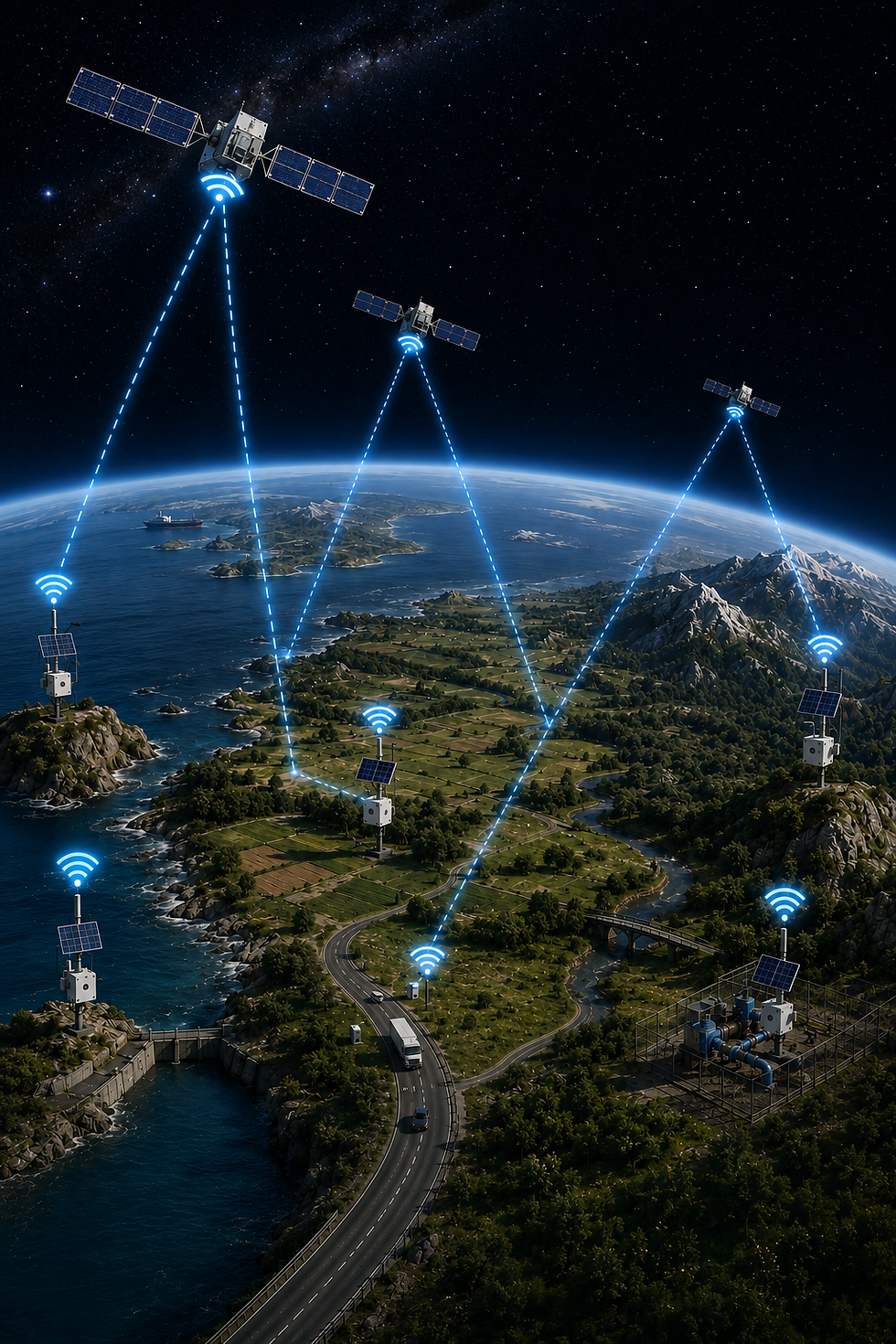
Satellite-connected systems
For remote locations with no communications infrastructure
Where there is no reliable cellular or local network coverage, satellite can provide a practical route back from the field. It is typically used for very remote deployments where getting data out matters more than high bandwidth.
How this helps you
-
Maintain communications in isolated or infrastructure-poor locations
-
Monitor equipment in places conventional networks cannot reach
-
Support critical visibility from remote assets
-
Avoid blind spots in geographically challenging deployments
Satellite is used when equipment is operating beyond the reach of normal networks. We help you use it in the situations where getting reliable information out of a remote asset is worth far more than the cost of the connection.
Real-World Engineering
Over the years, we’ve worked on remote monitoring systems across industrial and commercial environments where the challenge wasn’t just connecting devices, but making sure the data was reliable, useful and sustainable over time.
Below are examples showing how we’ve designed and delivered systems that operate in real conditions.


FAQs
The more often a device wakes up, processes data and transmits, the more power it will consume. The right answer depends on what really needs to be measured, how quickly it needs to be seen at the backend, what the system is trying to achieve and whether on-board or off-board processing of data is required to minimise power consumption.
We design around those trade-offs deliberately and build them into the system design.
By treating connectivity as part of the whole system, not as a standalone choice.
A method may look right on paper, but still create problems once you factor in power use, installation constraints, data transmission frequency, environment, available infrastructure and long-term support.
We look at those together early, so the connection method fits how the product will actually be used. (For example, a battery-operated product with a low data rate reading a sensor may select a lower power/low data rate such as LoRa.)
In many cases, yes.
Where it makes sense, monitoring systems can be designed to feed data into existing software, dashboards or operational tools rather than forcing you to create something separate. The important thing is understanding early how the data needs to move, how it will be structured, and who needs to use it.
A pilot can prove that the basic concept works, but wider deployment brings in practical issues such as battery life, connectivity coverage, device management, support, manufacturing consistency and how the data is handled at scale.
We design with that in mind early, so the system is not just workable in trial conditions, but ready for broader use.
Why Clients Choose Innovisory
We own the whole problem – Not just feasibility, but the complete path from concept to production
We design for long-term reliability – Systems that work in the real world, not just laboratories
We think at system level – Hardware, firmware, software, cloud and compliance as one integrated solution
We reduce delivery risk – Through structured process and system-level thinking
We bring 30+ years of experience – In industrial systems that must perform reliably for years
We deliver certainty, not just engineering – Clear answers, defensible recommendations, and confidence to proceed